As-trader
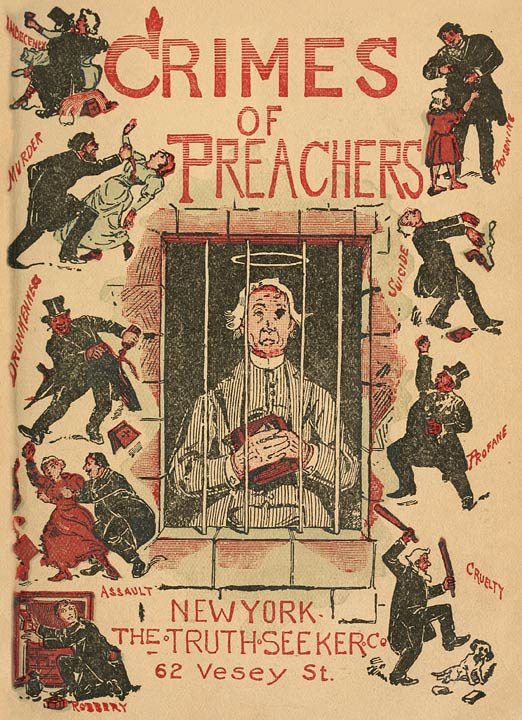
Crimes of Preachers in the United States and Canada by M. E. Billings
Crimes of Preachers in the United States and Canada by M. E. Billings
Couldn't load pickup availability
About this eBook
| Author | Billings, M. E. |
|---|---|
| Title | Crimes of Preachers in the United States and Canada |
| Credits | Produced by Jeroen Hellingman and the Online Distributed Proofreading Team at http://www.pgdp.net/ for Project Gutenberg (This file was produced from images generously made available by The Internet Archive/American Libraries.) |
| Reading Level | Reading ease score: 68.9 (8th & 9th grade). Neither easy nor difficult to read. |
| Language | English |
| LoC Class | BL: Philosophy, Psychology, Religion: Religion: General, Miscellaneous and Atheism |
| Subject | Criminals -- United States |
| Subject | Criminals -- Canada |
| Subject | Clergy -- Malpractice -- United States |
| Subject | Clergy -- Malpractice -- Canada |
| Category | Text |
| Source EBook-No. | Project Gutenberg 57764 |
| Release Date | August 24, 2018 |
| Copyright Status | Public domain in the USA. |
| Downloads | 2240 downloads in the last 30 days. |
| Project Gutenberg eBooks are always free! | |
Description
"Crimes of Preachers in the United States and Canada" by M. E. Billings is a critical examination of clerical misconduct written in the early 20th century. This work meticulously compiles instances of moral failings among clergymen, challenging the prevailing narrative that equates religious belief with moral integrity. The text addresses the discrepancies between the ideals upheld by religious leaders and their actual behavior, aiming to expose the hypocrisy within the clergy. The opening of the book introduces the context through a notable challenge made by actor Henry E. Dixey, who questioned the moral standards of ministers in comparison to those in the theatrical profession. It lays the groundwork for a systematic inquiry into clerical transgressions, citing numerous cases of preachers accused of various crimes, particularly those related to sexual misconduct. Billings argues that the high expectations placed upon clergymen should warrant closer scrutiny of their moral behavior, which is frequently shielded from public accountability by societal reverence for their positions.
Share